

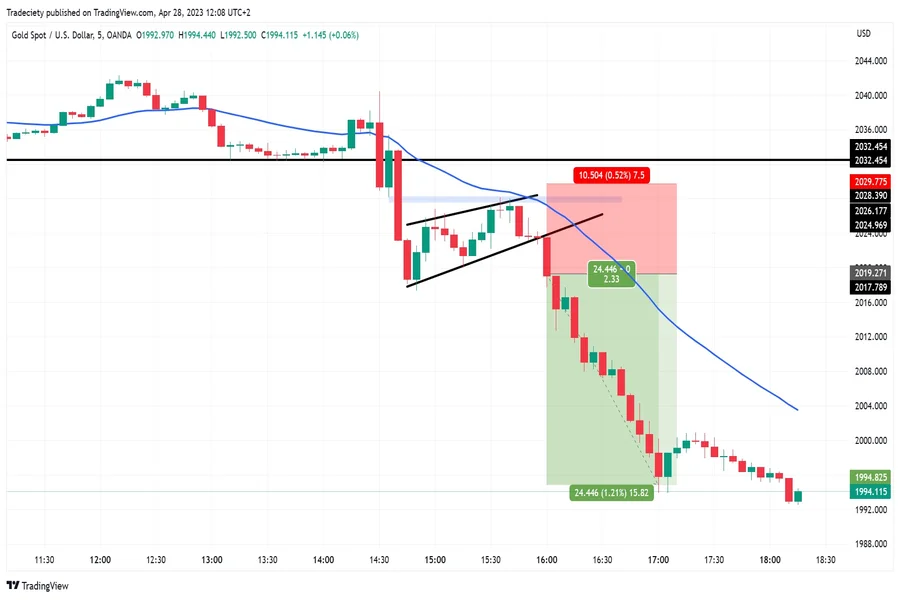
One of the most dynamic trading and rewarding areas in the forex market is day trading. When one is new to trading, the ability to comprehend the price action and ways to use it is one of the major steps towards being a successful trader. Price action trade involves the trading of an asset as per price changes, and not depending on too many indicators, as the principle of trading.
The best strategies using price action to improve your day trading success
What is price action trading?
Price action trading refers to the examination of the price action of currency pairs without using complicated signals. It is about watching the price movement live and making decisions depending on the trends that arise.
- Focus on price: Price action trading is based entirely on the historical price of the market.
- Chart patterns: Candlestick, support and resistance are some of the chart patterns used by the traders.
- Timeframes This technique will work on different periods, according to your style of trading.
Profitable best day trading strategies using price action
Support and resistance levels
The levels of support and resistance are crucial areas of the market at which the market has already turned or at least stagnated. The following levels are crucial in the price action trading.
- Support: The support is a price point and at which a currency pair is likely to cease and possibly turn.
- Resistance: This is the price at which the pair usually halts its upward movement and can go down.
- Enter at key levels: Buy at support and sell at resistance when the price is showing that it is turning around.
Breakout strategy
Breakout trading is trading where the price breaks down through the noteworthy support and resistance levels.
- Determine important levels: Establish support and resistance lines to determine possible break out points.
- Enter after breakout: After the price has broken either above the resistance or below the support go into trade.
- Volume confirmation: This is where the breakout is to be verified with a trading volume spike.
Trend reversal strategy
A trend reversal is the situation when the market in question shifts to a different direction either an uptrend on a downtrend or the opposite. This plan is based on identification of possible reversal points in the market.
- Look for reversal patterns: Such trends as head and shoulders or double tops/bottoms may show that the trend is reversing.
- Confirm with volume: The reversal can be confirmed with a large increase in volume or alternate a reversal in momentum.
- Enter at reversal points: At reversal points; Stock can be bought with the inception of a fresh uptrend, or it can be sold with the inception of a fresh downtrend.
Pullback strategy
Short term price ranges that are contrary to the direction are known as pullbacks. Pullback strategy involves getting in on a trade in the cases where the price is drawn out temporarily, which is nearer to the general trend of the market.
- Wait for the pullback: Wait until the price turns against one and then take a trade.
- Trend confirmation: Before deciding to take the trade, it is important to make sure that the overall trend is not yet destroyed.
- Enter at key levels: Search through pull backs in an upward trend or resistance in a downward trend.
Tips for beginners in price action trading
Some of the tips that would help you to get started with price action trading would include:
- Practice on a demo account: A demo account will allow ordering the price action with less risk; however, it will still require practicing.
- Start with simple strategies: Simple best day trading strategies such as support and resistance or candlestick patterns are a good place to start.
- Be patient: Price action trading is a process that takes time to yield results as good setups can take time to emerge.
- Stick to your plan: Act in accordance with your plan and make no attempt to stalk trades regardless of your emotions.
Summarizing
Price action trading is a very strong field of day trading, particularly to the novice traders who wish to know and engage in the price actions of the forex market. Was there a strategy of support and resistance levels, candlestick patterns, and breakouts all enabling you to enhance your trading choices.
