

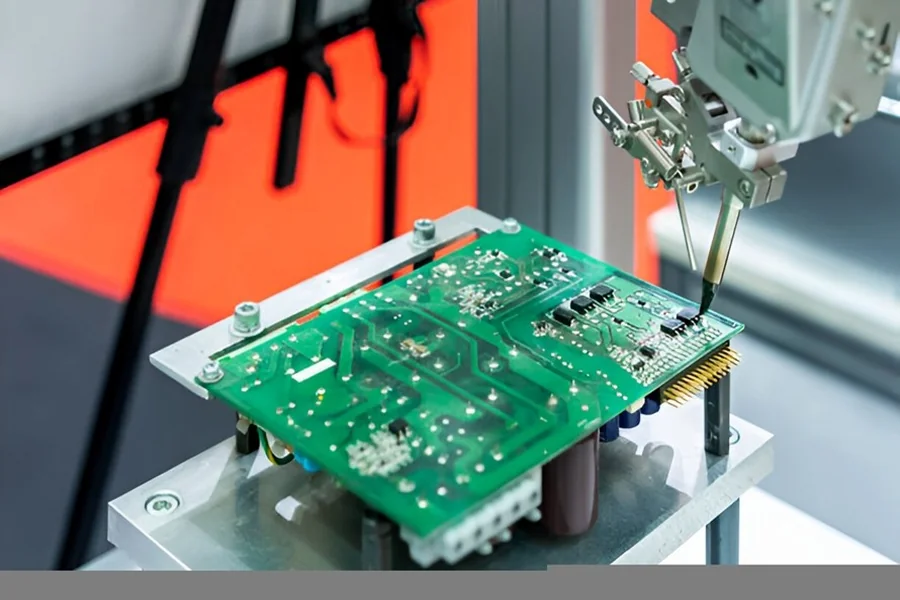
PCB design and assembly is a complete process that transforms an electronic idea into a fully functional circuit board ready for real-world use. It includes schematic creation, layout development, component selection, fabrication, and final assembly. A well-executed process ensures high performance, long-term reliability, and low production costs. Whether you are developing consumer electronics, industrial equipment, medical devices, or automotive systems, proper PCB design and assembly is the foundation for any successful electronic product.
Importance of PCB Design in the Electronics Development Cycle
Effective PCB design directly influences the performance, durability, and manufacturability of a product. Good design reduces signal noise, improves thermal performance, avoids manufacturing defects, and ensures compliance with industry standards. During the design phase, engineers consider board size, layer count, trace width, component placement, grounding strategies, and heat dissipation. These decisions eventually determine whether a product will work reliably in demanding conditions or fail prematurely.
Key Steps in PCB Design
The design process begins with a schematic, where engineers map out the electronic circuit. After the schematic is approved, the PCB layout stage begins. Here, components are arranged on the board, and copper traces are routed to create electrical connections. High-speed signals, power routing, analog sections, and sensitive components must be placed carefully to avoid interference. Design-for-Manufacturing (DFM) guidelines ensure the board can be fabricated and assembled cost-effectively. Gerber files and production documents are generated at the end of this stage.
Transitioning from Design to PCB Assembly
Once the PCB design is complete, the next step is fabrication and assembly. Fabrication creates the physical board with copper layers, vias, pads, and the required finishing. Assembly involves mounting components through SMT or THT technology. For simple products, single-sided or double-sided assembly is enough, but advanced electronics may require multilayer boards with fine-pitch components, BGAs, or mixed-technology assembly. The goal is to create a clean, solder-defect-free board that performs exactly as designed.
Understanding the PCB Assembly Process
The assembly process typically includes solder paste application, pick-and-place component mounting, reflow soldering, manual soldering for through-hole components, and inspection. Automated machines ensure high accuracy, especially for small or fine-pitch components. Reflow soldering heats the solder paste until it melts and bonds components to pads. Wave soldering or selective soldering may be used for through-hole parts. Final steps include cleaning, coating, testing, and verification to meet safety and quality standards.
Role of Testing in PCB Design and Assembly
Quality testing is crucial for ensuring that PCB design and assembly deliver a fully functional product. AOI, X-ray inspection, functional testing, and ICT help identify solder defects, shorts, opens, polarity mistakes, and component issues. In industries like medical or automotive, strict testing and documentation are mandatory to ensure compliance and long-term reliability.
Benefits of Professional PCB Design and Assembly Services
Using expert services ensures optimal performance, lower costs, and faster time-to-market. Experienced engineers can troubleshoot design flaws, optimize layouts for manufacturability, select the right materials, and ensure the assembly process meets global standards. This reduces rework, prevents component failures, and enhances product life. Professional design and assembly teams also handle BOM management, prototype builds, small-volume production, and scaling up to mass manufacturing.
Applications of PCB Design and Assembly Across Industries
PCB design and assembly are used in all modern electronic applications. Consumer electronics rely on compact boards with high component density. Automotive electronics require vibration-resistant, heat-tolerant designs. Medical devices demand safety, precision, and compliance. Industrial equipment needs durable PCBs that withstand harsh environments. Telecommunications, aerospace, IoT devices, and robotics also depend heavily on high-quality design and assembly.
Choosing the Right Partner for PCB Design and Assembly
Selecting a professional team ensures your product performs well and meets your industry requirements. Always choose companies with experience in complex PCB layouts, multilayer boards, high-speed routing, and both SMT and THT assembly. Evaluate their certifications, testing equipment, turnaround time, engineering support, and track record in your industry. The right partner can turn your idea into a reliable and scalable electronic solution.
Final Thoughts
A well-executed PCB design and assembly process is the backbone of successful electronic manufacturing. It ensures that your product is reliable, efficient, and ready for market use. If you are planning your next electronic project, working with experts who specialize in both PCB design and assembly will save time and reduce development costs while improving product quality. To take the next step, consider partnering with trusted printed circuit board assembly services that can support your engineering needs, from prototype to large-scale production.
